Start from genuine service coverage
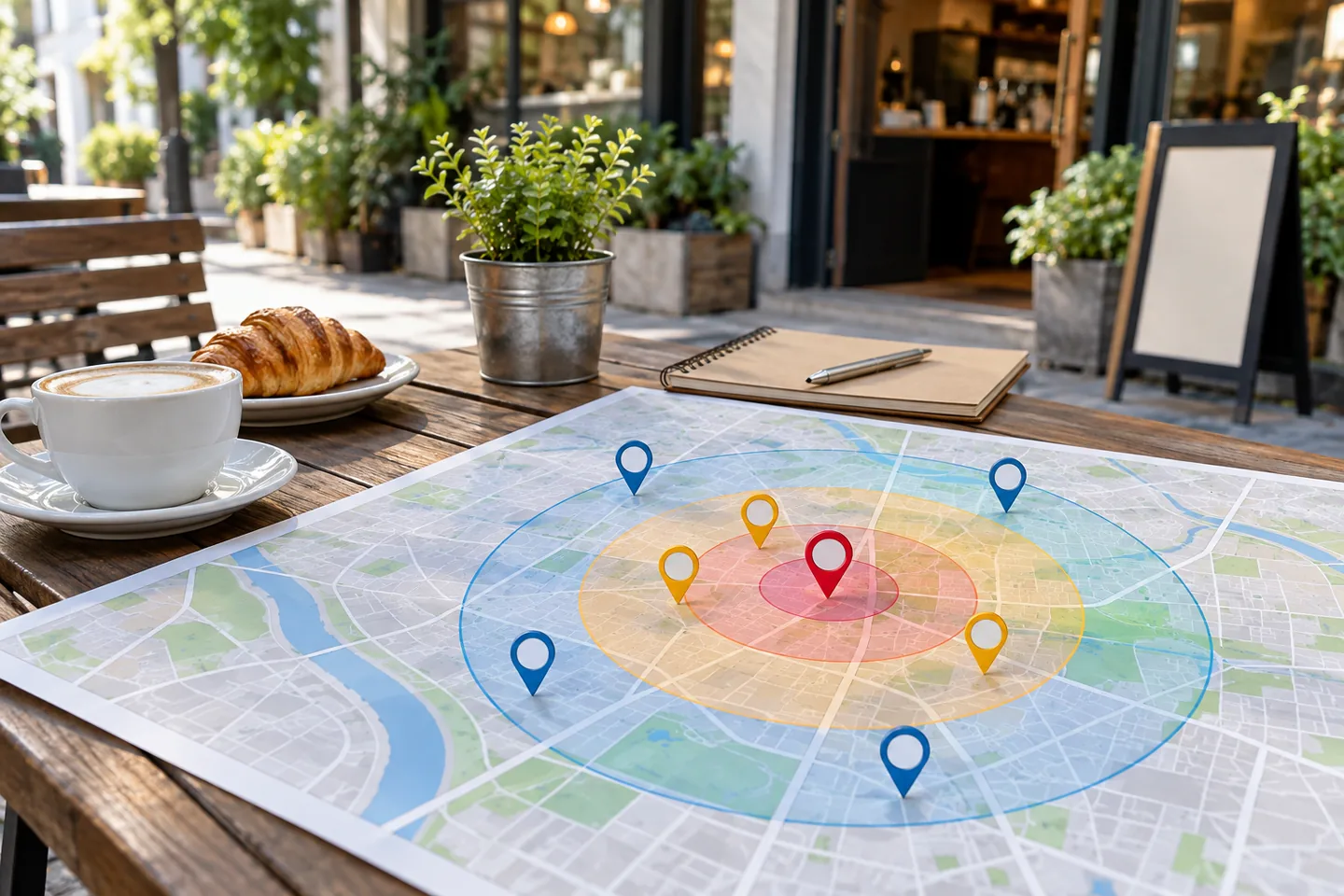
Map work and territory the business can truly support before creating regional pages. A storefront and a visiting service need different guidance. The repair example separates three visited districts from one drop-off counter. Travel, hours and staffing establish coverage, not a circle on a map. Use supported, conditional, unsupported and unverified states. Do not publish unknown areas as promises or assume adding locations produces a local-ranking improvement.
Collect search and operational evidence
Classify inquiries by place, requested work, acceptance and refusal reason while removing personal details. Distinguish branded searches from nearby-service discovery. Use records and Search Console rather than staff memory alone. Sparse observations mean uncertainty, not proven absence of demand. Thirty anonymized inquiries is a workload example, not a statistical threshold. Before collecting hundreds of phrases, inspect where representative requests would land and whether genuine information supports a regional destination.
Pair area wording with a customer need
Pair locations with actual objects or problems being served. Avoid pages differing only by a replaced place name. Check whether visit days, conditions, genuine examples or contacts vary. Administrative names, stations and informal labels may refer to the same area without justifying separate pages. Consolidate equivalent needs into useful coverage information and improve an existing destination where possible. New publication should follow a distinct informational requirement rather than every row generated by keyword research.
Distinguish administrative names, station names and informal area labels. Several labels for the same place do not automatically require separate pages. Map query wording to the actual service territory and explain any operational difference that warrants a new destination. Consolidate proposals that only substitute a place name while repeating the same service and contact.

Map each need to a destination
Maintain intent, area, service, destination, evidence and priority. A home-visit query needs coverage and charging conditions; a drop-off query needs location and intake hours. Split pages only when distinct information is necessary. The business must supply operational facts rather than asking a writer to invent local knowledge. Define success as useful decision information and retain enough mapping to investigate an ineligible inquiry later, instead of treating page count as the output objective.
| Item | Action | Acceptance check |
|---|---|---|
| Area | Verify acceptance conditions | The business can provide the service |
| Search need | Map to an existing page | Useful decision information exists |
| Follow-up | Separate search and inquiry data | Ineligible requests are identifiable |
Reconcile the public operating facts
Reconcile identity, address, hours and services across website and Business Profile. Select storefront or service-area configuration from actual operations, not an assumed advantage. Review address disclosure and intake limitations. Local ranking considers multiple factors; extra place names alone are not a guarantee. Keep planned expansion separate from current coverage and verify that the named contact can genuinely accept the published request under its stated conditions.
Reconcile public business identity, contacts and intake hours with the website. Reflect unavailable visit days or appointment constraints in the actual contact guidance. Configure address presentation according to the real business model and check photographs for unintended address disclosure. A planned territory expansion is not current coverage and should not be published as an available service.
Correct coverage changes consistently
Update conditions when an area can no longer be served and use a genuine alternative branch where appropriate. Do not invent a local presence or change territory solely because rankings fluctuate. Include external advertisements and referrals in corrections. Log dates, conditions and observation windows, noting seasonality or staffing differences. Personal search visibility is not a stable acceptance test. Read aggregate search evidence and actual inquiry eligibility separately before attributing change to a regional page edit.
Budget and evaluate the actual purpose
Separate inquiry classification, research, revision, profile maintenance and follow-up. Identify existing evidence gaps before buying another tool. Estimated search volume is not accepted business demand. Review Search Console with comparable pages, query groups, dates and devices, keeping Business Profile activity separate from website clicks. Classify inquiries by eligible location and service. Evaluate whether decision information and operational matches improved rather than inferring practical success from impressions alone.
Official sources
Pricing, availability and feature limits can change. Check the linked official pages before subscribing.
- Google Business Profile: Improve local rankingInformation checked: 2026-10-30
- Google Business Profile: Service areasInformation checked: 2026-10-30
- Search Console Performance reportInformation checked: 2026-10-30
- About Google Search ConsoleInformation checked: 2026-10-27
- Search Console performance metrics and setupInformation checked: 2026-10-27
- Search Console dimensions and data groupingInformation checked: 2026-10-27
- Google Trends data interpretationInformation checked: 2026-10-27